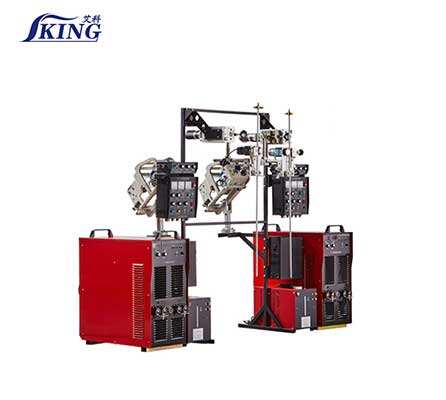
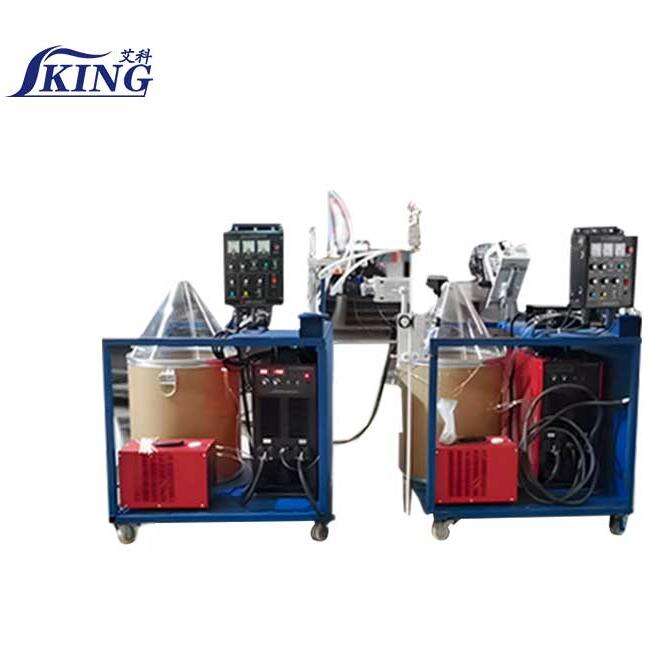
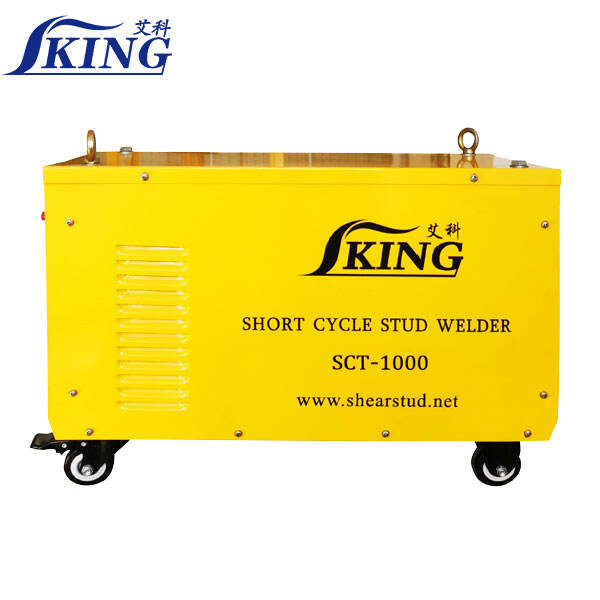
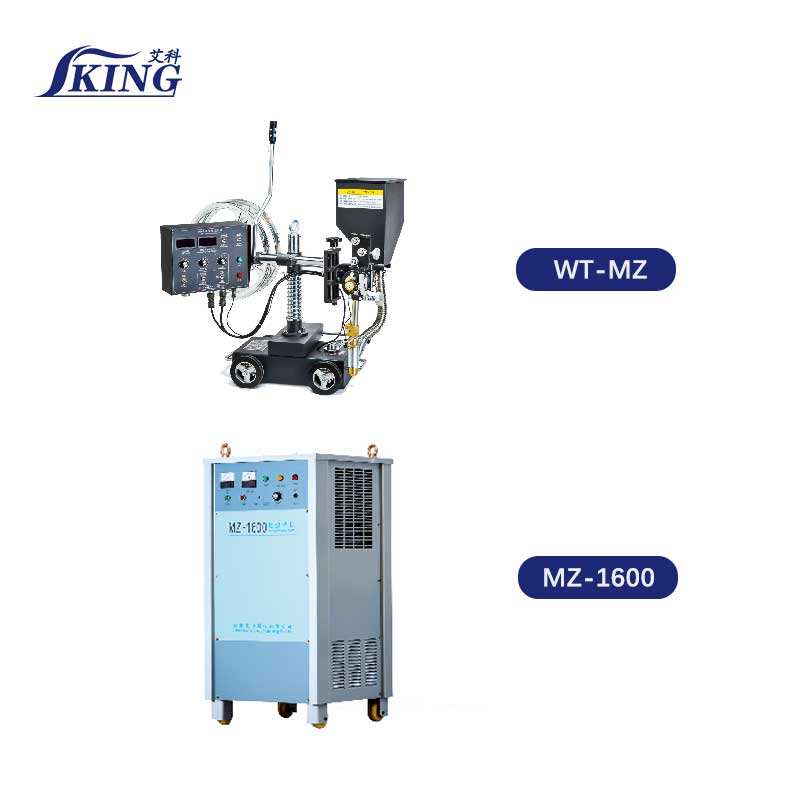
Manufacturing industries across the globe continue to seek innovative solutions that enhance productivity while maintaining cost-effectiveness. A column welding machine represents a pivotal investment for companies engaged in heavy fabrication and structural welding projects. These sophisticated systems deliver exceptional performance in joining large-scale components, offering substantial returns on investment through increased throughput and superior weld quality. Understanding the financial implications and operational benefits of implementing column welding technology becomes crucial for manufacturing decision-makers evaluating equipment upgrades.

Column welding machines incorporate vertical column structures that provide exceptional stability and positioning accuracy for welding operations. The fundamental design utilizes a robust vertical framework supporting the welding head assembly, enabling precise movement along multiple axes. This configuration facilitates optimal access to workpieces while maintaining consistent arc characteristics throughout the welding process. The machine's structural integrity ensures minimal vibration interference, contributing to superior weld bead formation and reduced defect rates.
Advanced control systems integrated within modern column welding machines enable programmable welding parameters, allowing operators to establish consistent procedures for repetitive tasks. The electronic control units manage variables such as travel speed, wire feed rate, and voltage regulation with exceptional precision. These capabilities translate directly into improved weld quality consistency and reduced material waste, factors that significantly impact overall operational costs and project timelines.
Column welding equipment excels in applications requiring precise positioning and extended welding capabilities on large structural components. Shipbuilding operations utilize these machines extensively for hull construction and superstructure assembly, where consistent penetration and minimal distortion prove critical. Heavy equipment manufacturing benefits from the ability to weld thick plate materials and complex geometries that would challenge conventional welding approaches.
The versatility of column welding systems extends to pressure vessel fabrication, where code compliance and weld integrity requirements demand exceptional process control. Bridge construction projects leverage the machines' capacity for long continuous welds on structural steel members, reducing labor requirements while improving overall joint quality. Pipeline fabrication facilities implement column welding technology to achieve high deposition rates necessary for meeting production schedules in competitive markets.
Implementation of a column welding machine generates immediate cost reductions through enhanced welding speeds and reduced labor requirements. Automated travel mechanisms enable continuous welding operations at optimal speeds, often achieving deposition rates exceeding manual welding by factors of three to five. This increased productivity translates into substantial labor cost savings, particularly on projects requiring extensive welding operations.
Material utilization improvements represent another significant cost advantage, as column welding machines minimize overwelding and reduce filler metal consumption through precise parameter control. The consistent arc characteristics and stable positioning result in more efficient material usage, reducing both raw material costs and post-weld cleanup requirements. These efficiency gains compound over multiple projects, creating substantial cumulative savings that contribute directly to improved profit margins.
Superior weld quality achieved through column welding technology dramatically reduces rework costs and schedule delays associated with defective joints. The stable platform and controlled environment minimize variables that contribute to welding defects such as porosity, incomplete penetration, and irregular bead profiles. Consistent heat input and travel speed control ensure uniform mechanical properties throughout welded joints, reducing rejection rates during quality inspections.
Non-destructive testing costs decrease significantly when implementing column welding systems, as the improved process control results in fewer defects requiring remediation. The reduction in repair welding saves both direct labor costs and indirect expenses related to project delays and customer satisfaction issues. These quality improvements enhance company reputation and contribute to securing future contracts through demonstrated reliability and craftsmanship.
Column welding machines enable dramatic improvements in production throughput by facilitating faster travel speeds and higher deposition rates compared to manual welding processes. Typical installations achieve productivity increases ranging from 200% to 400% depending on application specifics and workpiece geometry. The ability to maintain consistent welding parameters throughout long seams eliminates the variability associated with manual operations, resulting in predictable production schedules and improved capacity utilization.
Cycle time reductions extend beyond the welding process itself, encompassing setup time savings through programmable positioning systems and automated parameter selection. The machine's ability to store welding procedures for specific joint configurations enables rapid changeover between different product types, minimizing downtime and maximizing equipment utilization. These operational efficiencies contribute to improved delivery performance and enhanced customer satisfaction through reliable project completion schedules.
The implementation of column welding technology optimizes labor allocation by reducing the skill level required for routine welding operations while enabling experienced welders to focus on complex tasks requiring manual expertise. Semi-automated operation eliminates the physical demands associated with manual welding of large components, reducing operator fatigue and improving consistent performance throughout work shifts. This approach maximizes the value contribution of skilled personnel while enabling effective utilization of less experienced operators for routine production tasks.
Training requirements for column welding machine operators focus primarily on equipment operation and programming rather than developing advanced manual welding skills, reducing the time and cost associated with workforce development. The simplified operation and consistent process parameters enable faster competency achievement for new operators, addressing skilled labor shortage challenges while maintaining production quality standards.
ROI calculations for column welding machine investments typically demonstrate payback periods ranging from 12 to 24 months, depending on utilization rates and application complexity. The calculation methodology incorporates direct cost savings from reduced labor requirements, material efficiency improvements, and quality enhancement benefits. Higher utilization scenarios in continuous production environments often achieve shorter payback periods through maximized productivity gains and overhead cost distribution across increased output volumes.
Equipment financing options and tax considerations further enhance the financial attractiveness of column welding machine investments. Depreciation benefits and potential tax credits for manufacturing equipment purchases reduce the effective capital cost, improving overall return calculations. Lease arrangements provide alternative financing structures that align equipment costs with revenue generation, particularly beneficial for companies with limited capital resources or seasonal production patterns.
Beyond immediate cost savings, column welding machine investments create sustainable competitive advantages through enhanced production capabilities and improved quality reputation. The ability to bid on larger projects requiring advanced welding technology opens new market opportunities and revenue streams previously inaccessible with manual welding capabilities. These strategic benefits often exceed the quantifiable cost savings, contributing to long-term business growth and market position strengthening.
Technology advancement considerations ensure that modern column welding machines maintain relevance and value throughout their operational lifespan. Upgradeable control systems and modular design features enable adaptation to evolving industry requirements and standards, protecting the investment value against technological obsolescence. The enhanced production capacity also provides flexibility to accommodate business growth without proportional increases in equipment investment or facility expansion requirements.
Successful column welding machine implementation requires comprehensive planning addressing facility modifications, utility requirements, and workflow integration. Adequate floor space allocation must accommodate the machine's footprint along with material handling equipment and safety zones required for efficient operation. Electrical infrastructure upgrades often become necessary to support the high-power requirements typical of industrial welding systems, requiring coordination with utility providers and electrical contractors during installation planning.
Ventilation system enhancements ensure compliance with workplace safety standards while maintaining optimal air quality in the welding environment. The concentrated heat generation and fume production associated with high-deposition welding processes necessitate robust exhaust systems designed specifically for industrial welding applications. Proper ventilation design also contributes to equipment longevity by preventing excessive heat buildup and contamination of sensitive electronic components.
Comprehensive operator training programs ensure optimal utilization of column welding machine capabilities while maintaining safety standards and equipment longevity. Training curricula should encompass machine operation, programming procedures, maintenance requirements, and troubleshooting techniques specific to the installed equipment model. Manufacturer-provided training programs typically offer the most comprehensive instruction, combining theoretical knowledge with hands-on experience using actual production scenarios.
Integration with existing production workflows requires careful analysis of material flow patterns, quality control procedures, and documentation requirements. Standardized operating procedures must incorporate column welding machine capabilities while maintaining compliance with applicable welding codes and customer specifications. Change management strategies help ensure smooth transition from existing processes while minimizing disruption to ongoing production commitments and delivery schedules.
The selection of appropriate column welding machine specifications depends on several key factors including maximum workpiece dimensions, required welding positions, production volume expectations, and available facility space. Workpiece weight capacity considerations must account for both current production requirements and anticipated future needs to ensure long-term equipment utility. Travel envelope requirements should accommodate the largest components expected while providing adequate clearance for material handling equipment and operator access.
Column welding machines typically offer superior cost-effectiveness for applications involving large structural components and variable product configurations compared to robotic welding systems. The simplified programming and setup requirements reduce implementation complexity while maintaining high productivity levels suitable for medium to high-volume production scenarios. Robotic systems excel in highly repetitive applications with consistent joint geometries, while column welding machines provide greater flexibility for custom fabrication and prototype development work.
Regular maintenance for column welding machines includes routine inspections of mechanical components, electrical connections, and control system calibration to ensure optimal performance and safety compliance. Preventive maintenance schedules typically require weekly lubrication of moving parts, monthly calibration checks, and annual comprehensive inspections by qualified technicians. Operating costs encompass electricity consumption, consumable welding materials, replacement parts, and periodic software updates necessary to maintain current functionality and compliance with evolving industry standards.
Most existing welding procedure specifications can be adapted for column welding machine applications with appropriate parameter adjustments to account for the automated travel and positioning capabilities. Welding procedure qualification testing may be required to validate the modified parameters and ensure compliance with applicable welding codes and customer requirements. The enhanced process control available with column welding technology often enables procedure optimization that improves both quality and efficiency compared to manual welding approaches while maintaining code compliance.
 Hot News
2026-04-09
2026-04-08
2026-04-07
2026-02-26
2026-02-19
2026-02-18

Since 1991, China IKING Industrial Group has been at the forefront of advanced welding technology. With a global presence and over 30 years of experience, we offer innovative solutions in submerged arc welding, electroslag welding, and stud welding. Our high-performance machines have empowered over 100 countries and key industries such as wind energy, shipbuilding, rail transport, and heavy machinery.
RM801-822, Hongxing Building 3, Linke West Road, Hedong District, Tianjin, China
Copyright © 2026 China IKING Industrial Group Co., Ltd. All right reserved Privacy Policy
 EN
EN