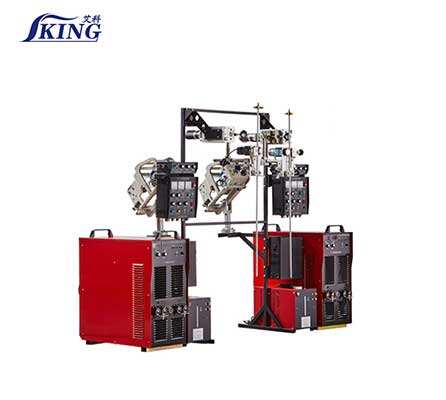
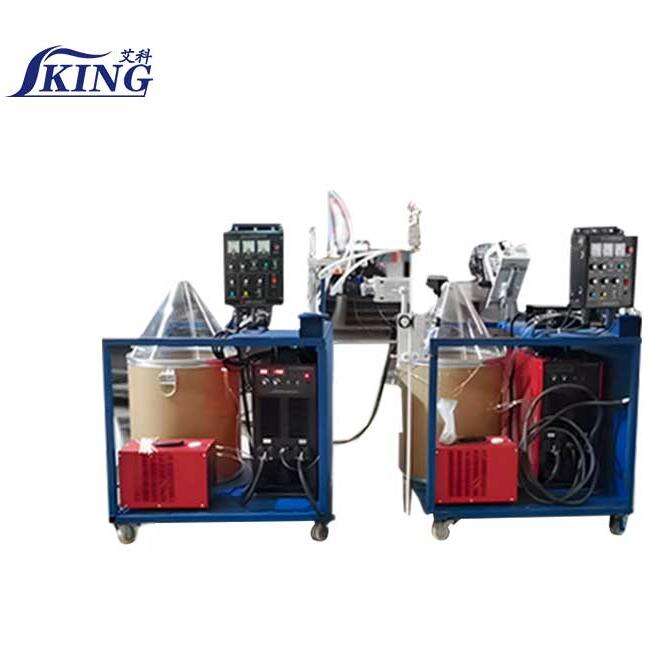
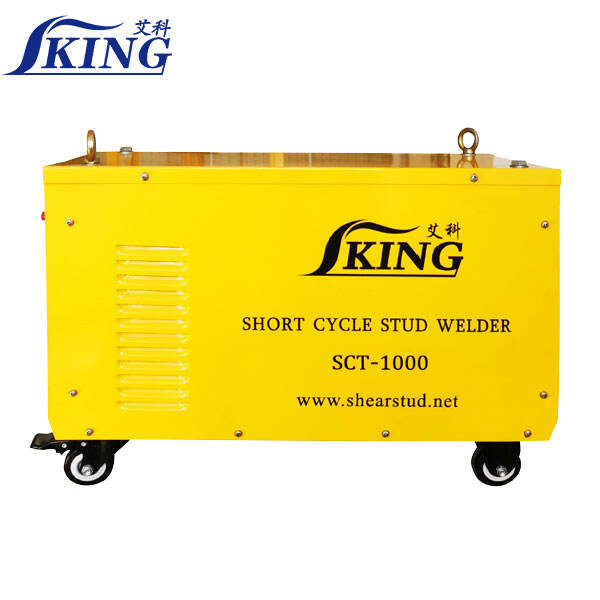
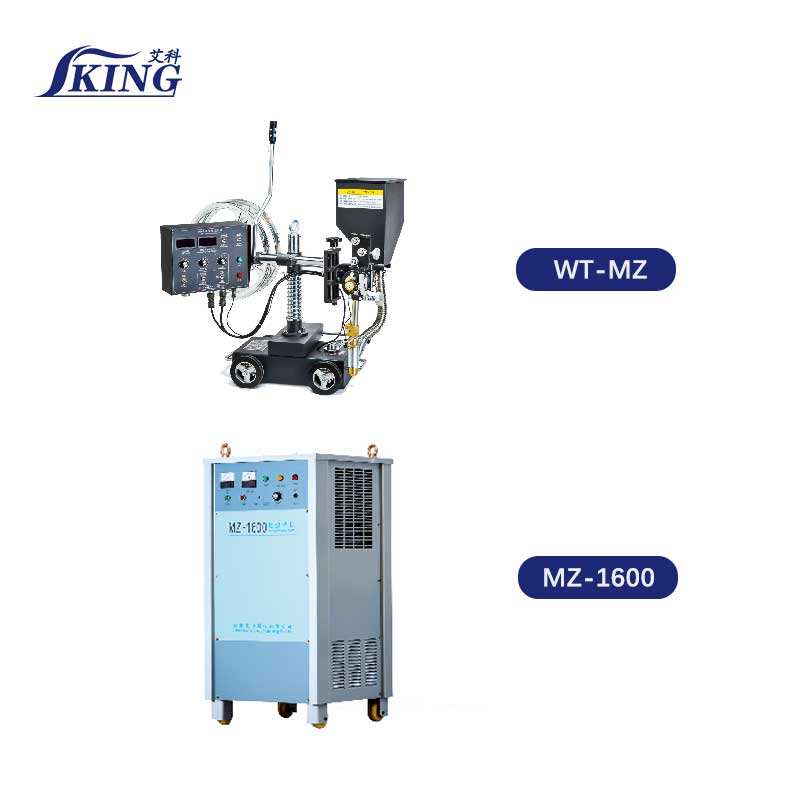
Modern steel fabrication facilities face increasing demands for precision, efficiency, and consistent quality in their welding operations. The integration of advanced welding technology has become essential for maintaining competitive advantages in today's industrial marketplace. A column welding machine represents a pivotal investment that can transform production capabilities while ensuring superior joint quality across diverse steel fabrication projects. These sophisticated systems offer manufacturers the opportunity to streamline their workflow processes, reduce labor costs, and achieve repeatable welding results that meet stringent industry standards.

The fundamental architecture of a column welding machine centers around vertical positioning mechanisms that provide exceptional stability and precision during welding operations. These systems incorporate advanced servo motors, precision guides, and robust column structures that ensure consistent torch positioning throughout extended welding cycles. The vertical column design eliminates many variables associated with traditional welding setups, particularly when working with large structural steel components that require multiple passes or extended seam welding.
Control systems integrated within modern column welding machines utilize programmable logic controllers and advanced sensor technology to monitor welding parameters in real-time. These sophisticated control interfaces allow operators to establish precise welding sequences, adjust parameters dynamically, and maintain consistent heat input across varying material thicknesses. The integration of feedback mechanisms ensures that welding conditions remain optimal even when encountering minor variations in material preparation or joint fit-up conditions.
Column welding machines offer significant advantages in terms of repeatability and precision compared to manual or semi-automatic welding processes. The rigid column structure eliminates torch deflection and maintains consistent standoff distances, resulting in uniform penetration profiles and superior weld quality. This consistency becomes particularly valuable when fabricating structural components that require certification or when producing multiple identical assemblies for industrial applications.
The automated positioning capabilities of a column welding machine reduce operator fatigue and minimize human error factors that can compromise weld quality. Advanced systems incorporate oscillation patterns, weaving functions, and multi-pass programming that would be difficult or impossible to achieve consistently through manual welding techniques. These technological enhancements translate directly into improved production rates and reduced rework requirements across various steel fabrication applications.
Successful integration of a column welding machine requires comprehensive analysis of existing production workflows to identify optimal placement within the manufacturing sequence. Fabrication facilities must evaluate material flow patterns, bottleneck locations, and quality control checkpoints to determine where automated welding technology can provide maximum impact. This analysis should consider both current production requirements and anticipated growth in manufacturing volume or complexity.
The positioning of column welding equipment within the production layout affects overall efficiency and material handling requirements. Strategic placement near material preparation stations, such as cutting or forming areas, can minimize transportation time and reduce the risk of material damage during handling. Additionally, proximity to quality inspection stations enables rapid feedback on welding performance and facilitates continuous process improvement initiatives.
Installing a column welding machine typically requires specific infrastructure considerations including adequate electrical supply, compressed air systems, and proper ventilation for fume extraction. The substantial weight and size of these systems necessitate reinforced flooring or dedicated foundations to ensure stable operation and prevent vibration transmission to adjacent equipment. Proper planning for these infrastructure requirements during the integration phase prevents costly modifications and operational delays.
Space allocation for a column welding machine must account for material loading areas, operator access zones, and maintenance clearances. The vertical nature of these systems requires sufficient overhead clearance for component installation and service activities. Additionally, consideration must be given to crane access or overhead handling systems that may be required for positioning large workpieces within the welding fixture area.
The implementation of a column welding machine in steel fabrication operations typically results in measurable improvements in production throughput and cycle time reduction. Automated welding sequences eliminate the variability associated with manual torch manipulation, enabling consistent travel speeds and optimal arc characteristics throughout the welding process. These improvements become particularly significant when producing large quantities of similar components or when working with thick-section materials requiring multiple welding passes.
Reduced setup time represents another significant efficiency gain when utilizing column welding technology. Once welding parameters and positioning sequences are programmed, reproduction of identical welds requires minimal operator intervention beyond workpiece loading and unloading. This standardization enables fabrication facilities to achieve higher equipment utilization rates and reduces the skill level requirements for certain welding operations.
The precision positioning capabilities inherent in column welding machine systems contribute significantly to improved weld quality and reduced rejection rates. Consistent torch angles, travel speeds, and heat input parameters result in uniform penetration profiles and minimized distortion across welded assemblies. This consistency becomes particularly valuable when fabricating structural components subject to rigorous inspection requirements or certification standards.
Documentation and traceability capabilities built into modern column welding systems provide comprehensive records of welding parameters for each completed joint. These data logging features support quality assurance programs and enable rapid identification of process variables when investigating quality issues. The ability to correlate specific welding conditions with resulting weld properties facilitates continuous improvement initiatives and process optimization efforts.
Transitioning to column welding machine operations requires structured training programs that address both technical operation procedures and safety protocols specific to automated welding systems. While these systems reduce the manual dexterity requirements associated with conventional welding, operators must develop proficiency in programming welding sequences, interpreting system diagnostics, and performing routine maintenance activities. Comprehensive training ensures optimal system utilization and prevents operational errors that could compromise weld quality or equipment performance.
Certification programs for column welding machine operators should encompass both theoretical knowledge of welding metallurgy and practical experience with system programming and troubleshooting. Understanding the relationship between welding parameters and resulting weld characteristics enables operators to make informed adjustments when encountering variations in material conditions or joint configurations. This knowledge base supports both quality objectives and continuous improvement initiatives within the fabrication operation.
Establishing effective maintenance protocols for column welding machines involves developing both preventive maintenance schedules and emergency response procedures for equipment malfunctions. Regular maintenance activities include lubrication of positioning mechanisms, calibration of sensor systems, and inspection of electrical connections to ensure consistent performance and prevent unexpected downtime. Properly trained maintenance personnel can identify potential issues before they impact production schedules or weld quality.
Technical support infrastructure should include access to replacement parts, diagnostic equipment, and manufacturer assistance for complex system issues. Maintaining an inventory of critical spare parts reduces downtime when components require replacement, while diagnostic capabilities enable rapid identification of system malfunctions. Strong relationships with equipment suppliers and service providers ensure ongoing technical support throughout the operational lifecycle of the column welding machine.
Evaluating the economic justification for column welding machine integration requires comprehensive analysis of both direct and indirect cost factors. Direct cost considerations include equipment purchase price, installation expenses, training costs, and ongoing maintenance requirements. Indirect factors encompass productivity improvements, quality enhancements, reduced rework costs, and potential for expanded market opportunities through improved manufacturing capabilities.
Payback period calculations should account for labor cost savings achieved through automation, reduced consumable usage due to improved welding efficiency, and decreased rejection rates resulting from enhanced quality control. Many fabrication facilities experience payback periods ranging from eighteen to thirty-six months, depending on production volume and the complexity of welded assemblies. These calculations become more favorable when considering the extended service life and reliability characteristics of modern column welding systems.
Investment in advanced welding technology such as column welding machines positions fabrication facilities to compete more effectively for projects requiring high precision and consistent quality standards. The ability to provide certified welding documentation, reduced lead times, and competitive pricing through improved efficiency creates significant marketing advantages. These capabilities often enable fabricators to pursue higher-value contracts and develop long-term relationships with demanding customers.
Market differentiation through advanced welding capabilities becomes increasingly important as industry standards continue to evolve toward higher quality requirements and tighter tolerances. Fabrication facilities equipped with modern column welding technology can respond more effectively to customer requests for specialized welding applications and maintain competitiveness in markets where precision and reliability are paramount considerations.
Column welding machines provide the greatest benefit for projects involving repetitive welding operations, thick-section materials, or applications requiring exceptional precision and consistency. Structural steel fabrication, pressure vessel manufacturing, shipbuilding components, and heavy machinery construction represent ideal applications where the automated positioning and consistent welding parameters deliver significant quality and efficiency improvements over conventional welding methods.
The rigid column structure maintains precise torch positioning and consistent travel speeds, eliminating variables associated with manual torch manipulation. This consistency results in uniform penetration profiles, reduced porosity, and minimized distortion across welded joints. Advanced control systems monitor welding parameters in real-time and make automatic adjustments to maintain optimal arc characteristics throughout the welding process.
Installation requirements include adequate electrical supply capacity, compressed air systems, proper ventilation for fume extraction, and reinforced flooring or dedicated foundations to support the equipment weight. Sufficient overhead clearance for maintenance access and crane operations may also be necessary. Planning for these infrastructure requirements during the integration phase prevents costly modifications and ensures optimal system performance.
Comprehensive operator training programs typically require two to four weeks, depending on the operator's existing welding experience and the complexity of the specific column welding system. Training encompasses system programming, parameter optimization, troubleshooting procedures, and safety protocols. Ongoing skill development and periodic refresher training help maintain optimal system utilization and support continuous improvement initiatives within the fabrication operation.
 Hot News
2026-04-09
2026-04-08
2026-04-07
2026-02-26
2026-02-19
2026-02-18

Since 1991, China IKING Industrial Group has been at the forefront of advanced welding technology. With a global presence and over 30 years of experience, we offer innovative solutions in submerged arc welding, electroslag welding, and stud welding. Our high-performance machines have empowered over 100 countries and key industries such as wind energy, shipbuilding, rail transport, and heavy machinery.
RM801-822, Hongxing Building 3, Linke West Road, Hedong District, Tianjin, China
Copyright © 2026 China IKING Industrial Group Co., Ltd. All right reserved Privacy Policy
 EN
EN