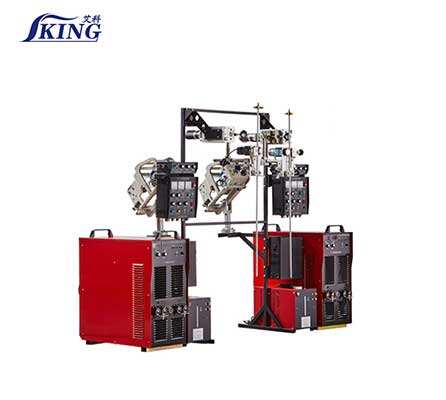
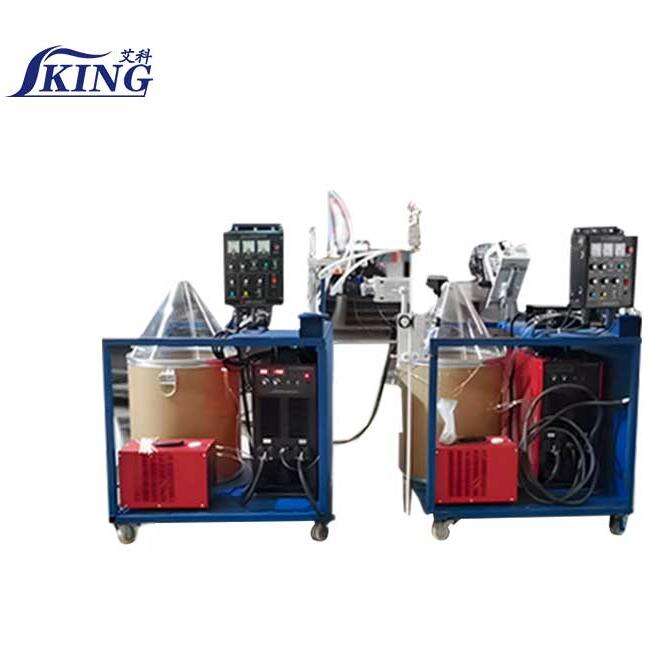
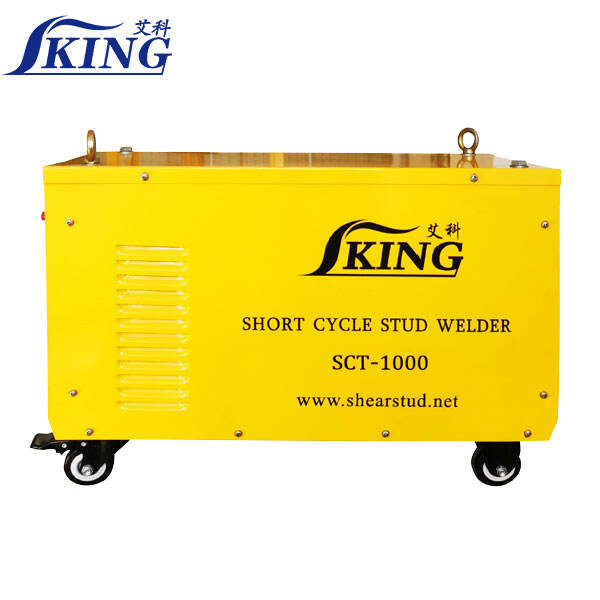
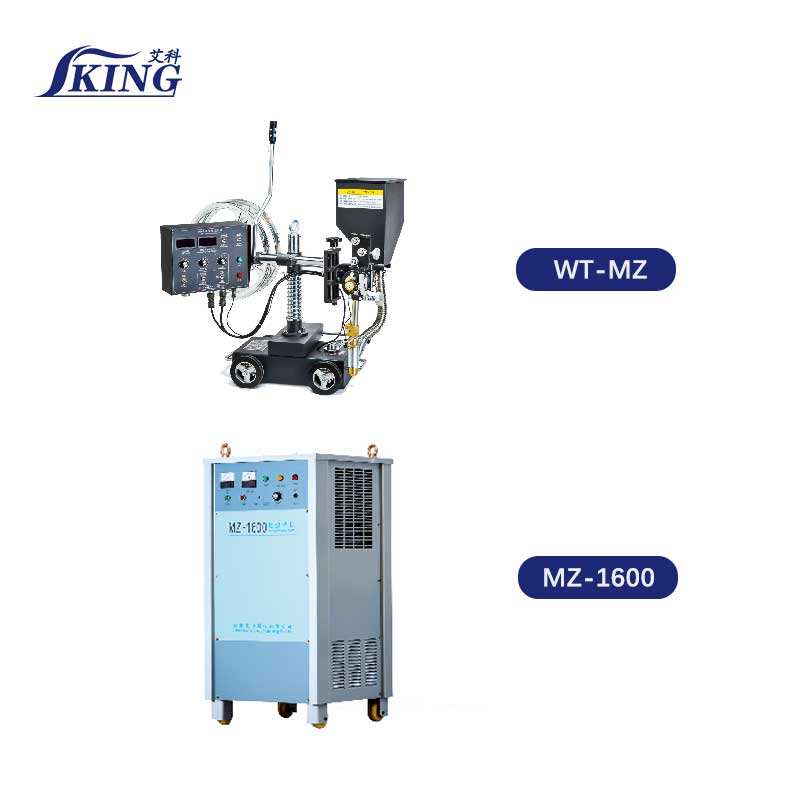
Industrial welding applications demand precision, efficiency, and adaptability to handle diverse fabrication requirements. When selecting the right equipment for heavy-duty operations, understanding the differences between various column welding machine configurations becomes crucial for optimal productivity. These sophisticated systems offer distinct advantages depending on your specific manufacturing needs, workspace constraints, and production volume requirements.

The choice between fixed and mobile designs, as well as single versus multi-torch configurations, directly impacts operational efficiency, installation costs, and long-term maintenance considerations. Modern fabrication facilities require equipment that can seamlessly integrate into existing workflows while providing the flexibility to adapt to changing production demands. Understanding these fundamental distinctions helps manufacturers make informed decisions that align with their strategic objectives and technical requirements.
Fixed column welding machine installations provide unmatched stability and precision for high-volume production environments. These permanently mounted systems eliminate vibration concerns that can compromise weld quality, ensuring consistent results across extended operational periods. The robust foundation allows for precise torch positioning and repeatable welding parameters, making them ideal for standardized production runs where dimensional accuracy is paramount.
The structural integrity of fixed systems supports heavier workpieces and enables more aggressive welding parameters without compromising stability. This characteristic proves particularly valuable in heavy industrial applications such as pressure vessel manufacturing, structural steel fabrication, and large-scale pipeline construction. The permanent installation also facilitates integration with automated material handling systems, conveyor networks, and quality control stations.
Implementing a fixed column welding machine requires careful consideration of facility layout, electrical infrastructure, and long-term production planning. These systems typically demand dedicated floor space, specialized foundations, and permanent utility connections including high-amperage electrical service, compressed air, and cooling systems. The installation process involves coordination with facility engineers to ensure proper load distribution and compliance with safety regulations.
The infrastructure investment extends beyond the equipment itself to include ventilation systems, safety barriers, and material handling equipment positioned around the fixed installation. While initial setup costs may be higher, the long-term operational efficiency and reduced maintenance requirements often justify the investment for facilities with consistent, high-volume welding requirements. Proper planning during installation ensures optimal workflow integration and maximizes return on investment.
Mobile column welding machine designs offer unparalleled flexibility for facilities requiring adaptable manufacturing capabilities. These systems feature robust wheels, adjustable outriggers, and portable power connections that enable repositioning throughout the facility as production needs change. The mobility advantage proves particularly valuable in job shops, repair facilities, and manufacturing environments handling diverse product lines with varying dimensional requirements.
The compact footprint of mobile systems allows efficient utilization of available floor space, enabling facilities to maximize their welding capacity without permanent infrastructure modifications. Advanced mobile designs incorporate stabilization systems that provide excellent rigidity during operation while maintaining the ability to relocate quickly when production schedules demand flexibility. This adaptability reduces the need for multiple fixed installations in larger facilities.
The operational versatility of mobile systems extends their value proposition beyond simple portability to include reduced facility modification costs and improved resource allocation. Manufacturing facilities can deploy a single column welding machine across multiple production areas, optimizing equipment utilization while maintaining operational flexibility. This approach proves particularly cost-effective for smaller facilities or those experiencing fluctuating production volumes.
Mobile systems typically feature modular designs that facilitate maintenance, component upgrades, and system modifications without extensive downtime. The ability to relocate equipment for maintenance or facility modifications reduces operational disruptions and improves overall equipment availability. While mobile systems may require additional setup time for each relocation, the operational flexibility often compensates for this minor inconvenience in dynamic manufacturing environments.
Single-torch column welding machine configurations provide exceptional control and precision for specialized applications requiring meticulous attention to weld quality. The simplified design reduces complexity, minimizes potential failure points, and enables operators to focus entirely on optimizing welding parameters for specific joint configurations. This focused approach proves particularly valuable for critical applications in aerospace, nuclear, and high-pressure vessel manufacturing where weld integrity is paramount.
The single-torch design facilitates precise heat input control, enabling optimal penetration characteristics while minimizing heat-affected zone dimensions. Advanced single-torch systems incorporate sophisticated monitoring capabilities that track welding parameters in real-time, providing immediate feedback for process optimization. The simplified torch management reduces operator training requirements and minimizes the potential for parameter confusion during complex welding sequences.
Single-torch configurations offer significant advantages in terms of initial investment, ongoing maintenance costs, and operator training requirements. The reduced component count translates to lower acquisition costs, simplified spare parts inventory, and streamlined maintenance procedures. These factors prove particularly important for smaller operations or specialized applications where the complexity of multi-torch systems may not be justified by production volume requirements.
The maintenance simplicity of single-torch systems extends to troubleshooting, calibration, and component replacement procedures. Technicians can quickly isolate issues, perform routine maintenance, and implement upgrades without the complexity associated with multiple torch coordination systems. This operational simplicity reduces downtime, improves equipment availability, and enables facilities to maintain welding operations with smaller technical support teams.
Multi-torch column welding machine systems deliver exceptional productivity gains for high-volume manufacturing applications requiring rapid throughput without compromising quality standards. These sophisticated systems can simultaneously weld multiple joints, complete complex weld sequences in single passes, or perform parallel operations on multiple workpieces. The productivity enhancement often justifies the additional complexity and investment for facilities with consistent, high-volume production requirements.
Advanced multi-torch systems incorporate intelligent torch coordination algorithms that optimize welding sequences, minimize travel time, and prevent interference between torch operations. The synchronized operation capabilities enable completion of complex assemblies in significantly reduced cycle times compared to sequential single-torch operations. This efficiency improvement directly translates to increased production capacity and improved manufacturing economics.
Multi-torch configurations excel in applications requiring simultaneous welding of complex joint geometries, large assemblies, or components with multiple weld seams. The ability to maintain synchronized heat input across multiple locations proves particularly valuable for minimizing distortion in large structures and ensuring uniform mechanical properties throughout complex assemblies. These capabilities prove essential in industries such as shipbuilding, heavy machinery manufacturing, and large-scale structural fabrication.
The coordinated operation of multiple torches enables advanced welding techniques such as balanced heat input for distortion control, synchronized root and cap pass operations, and complex three-dimensional weld path execution. Modern multi-torch systems incorporate sophisticated control algorithms that automatically adjust individual torch parameters to maintain optimal welding conditions across varying joint geometries and material thicknesses within the same assembly.
Selecting the optimal column welding machine configuration requires comprehensive analysis of production volume, workflow patterns, and facility constraints. High-volume, repetitive operations typically benefit from fixed installations with multi-torch capabilities, while diverse, lower-volume applications may favor mobile single-torch systems. The decision framework should consider current production requirements, anticipated growth, and flexibility needs for future product development.
Workflow analysis should evaluate material handling patterns, quality control procedures, and integration with existing manufacturing systems. Fixed systems excel in linear production environments with dedicated welding stations, while mobile systems provide advantages in cellular manufacturing layouts or facilities requiring frequent equipment reconfiguration. The analysis should also consider operator skill levels, training requirements, and maintenance capabilities when evaluating system complexity.
The economic evaluation of column welding machine options must consider total cost of ownership including acquisition, installation, operation, and maintenance expenses over the equipment lifecycle. Fixed multi-torch systems typically require higher initial investment but may provide superior long-term economics for high-volume applications. Mobile single-torch systems often offer better economics for facilities with variable production requirements or limited capital budgets.
Return on investment calculations should include productivity gains, quality improvements, reduced labor costs, and operational flexibility benefits. The analysis should also consider facility modification costs, utility upgrades, and infrastructure requirements associated with different configuration options. Long-term considerations include technology evolution, market changes, and potential facility expansion or relocation requirements that may affect equipment utilization.
Successful column welding machine implementation requires thorough planning, infrastructure assessment, and stakeholder coordination to ensure optimal integration with existing operations. The planning phase should include facility surveys, utility capacity evaluations, and workflow analysis to determine optimal equipment placement and configuration. Coordination with facilities management, production planning, and quality assurance teams ensures comprehensive consideration of all operational requirements.
Infrastructure preparation extends beyond physical installation to include operator training, maintenance procedure development, and quality control system integration. The preparation phase should establish standard operating procedures, maintenance schedules, and performance monitoring protocols to maximize equipment effectiveness. Proper planning minimizes installation downtime, reduces commissioning time, and accelerates achievement of full operational capability.
Effective operator training and operational integration are critical success factors for column welding machine implementations regardless of configuration complexity. Training programs should address equipment operation, parameter optimization, troubleshooting procedures, and safety protocols specific to the installed system. The training approach should consider existing operator experience levels and provide both theoretical knowledge and hands-on practice opportunities.
Operational integration requires coordination between production scheduling, quality control, and maintenance teams to establish efficient workflows and communication protocols. The integration process should include performance monitoring systems, documentation procedures, and continuous improvement mechanisms to optimize equipment utilization. Regular performance reviews and operator feedback sessions help identify optimization opportunities and ensure sustained operational excellence.
The choice between fixed and mobile configurations depends primarily on production volume consistency, facility layout flexibility requirements, and workflow patterns. Fixed systems excel in high-volume, repetitive operations with dedicated welding stations and consistent material flow. Mobile systems provide advantages for job shops, repair operations, or facilities requiring frequent equipment reconfiguration to accommodate diverse product lines or varying production schedules.
Single-torch systems offer simplified operation, reduced maintenance complexity, and lower training requirements, making them ideal for specialized applications or smaller operations. Multi-torch systems provide enhanced productivity and advanced capabilities but require more sophisticated control systems, increased maintenance attention, and higher operator skill levels. The complexity trade-off should be evaluated against production volume requirements and available technical support capabilities.
Fixed installations typically require dedicated foundations, permanent electrical connections, compressed air systems, and integrated ventilation solutions. Mobile systems need adequate floor surfaces, portable utility connections, and sufficient maneuvering space for repositioning. Multi-torch systems may require enhanced electrical capacity and more sophisticated control system infrastructure regardless of mobility configuration. Infrastructure planning should consider future expansion possibilities and operational flexibility requirements.
ROI evaluation should consider total cost of ownership including acquisition, installation, operation, and maintenance expenses over the equipment lifecycle. Benefits analysis should include productivity improvements, quality enhancements, labor cost reductions, and operational flexibility gains. The evaluation framework should also consider facility modification costs, training expenses, and potential production disruption during implementation to provide comprehensive economic comparison between configuration options.
 Hot News
2026-04-09
2026-04-08
2026-04-07
2026-02-26
2026-02-19
2026-02-18

Since 1991, China IKING Industrial Group has been at the forefront of advanced welding technology. With a global presence and over 30 years of experience, we offer innovative solutions in submerged arc welding, electroslag welding, and stud welding. Our high-performance machines have empowered over 100 countries and key industries such as wind energy, shipbuilding, rail transport, and heavy machinery.
RM801-822, Hongxing Building 3, Linke West Road, Hedong District, Tianjin, China
Copyright © 2026 China IKING Industrial Group Co., Ltd. All right reserved Privacy Policy
 EN
EN