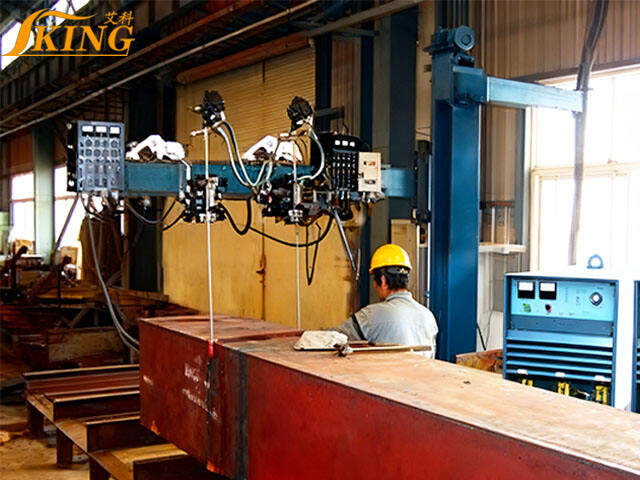
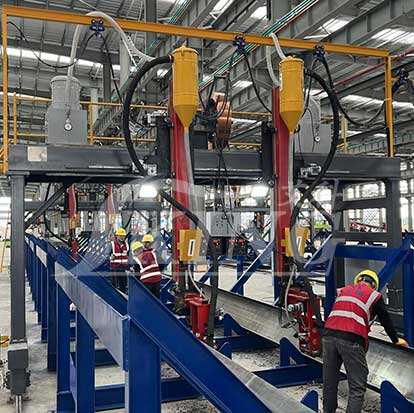
Box beam welding represents a cornerstone of modern steel fabrication, demanding precision equipment capable of handling massive structural components with exceptional accuracy. The box beam welding machine has revolutionized how fabricators approach these critical structural elements, offering automated solutions that ensure consistent weld quality while dramatically improving production efficiency. These sophisticated systems integrate advanced automation, precise positioning controls, and specialized welding processes to meet the exacting standards required for infrastructure projects, industrial construction, and heavy machinery manufacturing.
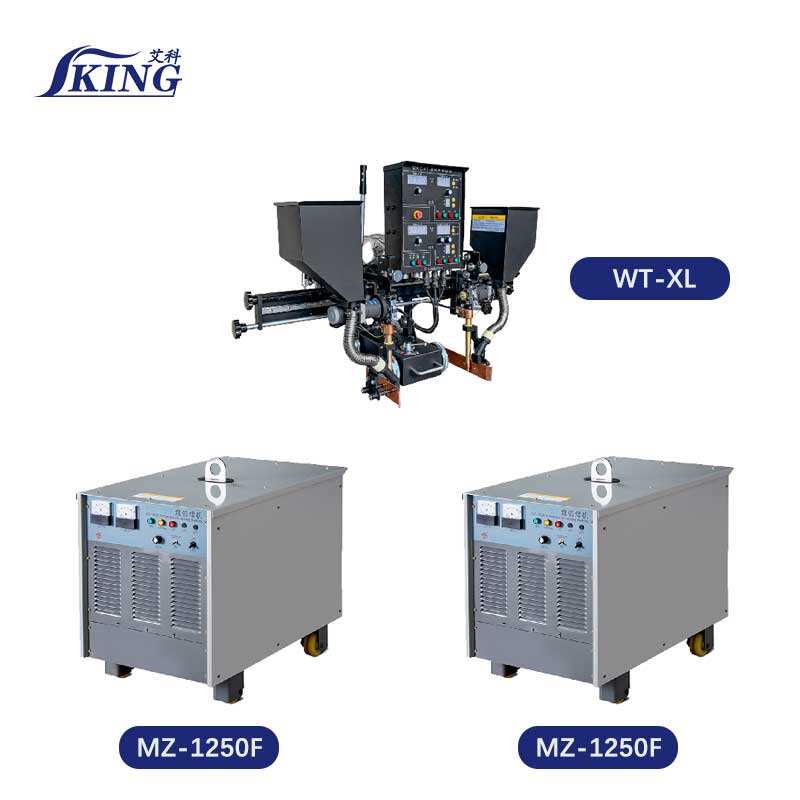
Understanding the comprehensive capabilities of a box beam welding machine becomes essential when evaluating high-efficiency steel fabrication solutions. This specialized equipment addresses the unique challenges associated with welding hollow rectangular steel sections, where internal accessibility limitations and structural integrity requirements demand sophisticated technological approaches. Modern fabrication facilities rely on these machines to maintain competitive advantage through enhanced productivity, superior weld quality, and reduced labor dependencies while meeting increasingly stringent safety and quality standards.
The box beam welding machine incorporates a robust mechanical framework designed to support and manipulate heavy steel sections throughout the welding process. Central to this architecture is a precision-engineered gantry system that provides stable platform movement while maintaining exact positional accuracy. The machine's foundation typically features reinforced steel construction with vibration dampening characteristics, ensuring welding stability even when processing substantial beam weights. Advanced servo motor systems drive the positioning mechanisms, offering precise control over travel speeds and positioning accuracy within tight tolerances.
Integrated clamping systems within the box beam welding machine provide secure workpiece retention during welding operations. These hydraulically actuated clamps automatically adjust to accommodate varying beam dimensions while maintaining consistent pressure distribution. The clamping mechanism incorporates quick-release features for efficient workpiece changeover, minimizing setup time between production runs. Specialized fixtures ensure proper beam alignment and prevent distortion during the welding process, maintaining dimensional accuracy throughout the fabrication cycle.
Modern box beam welding machine configurations typically employ submerged arc welding processes for their superior penetration characteristics and high deposition rates. The system integrates multiple welding heads positioned strategically to simultaneously weld both longitudinal seams of the box beam structure. This parallel processing approach significantly reduces cycle times while ensuring consistent heat input distribution. Advanced flux delivery systems maintain optimal coverage during welding, protecting the molten weld pool from atmospheric contamination while facilitating smooth arc characteristics.
Precise wire feeding mechanisms within the box beam welding machine maintain consistent electrode extension and travel speeds throughout the welding process. These systems incorporate tension monitoring and automatic adjustment capabilities to compensate for wire irregularities or feeding resistance variations. Real-time arc monitoring provides feedback for automatic parameter adjustment, ensuring optimal weld penetration and appearance across varying joint conditions. The integrated control system coordinates all welding parameters, including current, voltage, travel speed, and wire feed rate, maintaining optimal welding conditions throughout the production cycle.
The box beam welding machine delivers exceptional production throughput through automated operation cycles that minimize manual intervention requirements. Typical production rates range from 0.5 to 3.0 meters per minute, depending on beam dimensions, material thickness, and weld quality specifications. The system's ability to simultaneously weld multiple seams dramatically reduces per-unit processing time compared to conventional manual welding approaches. Automated workpiece handling systems further enhance throughput by enabling continuous production flow with minimal operator involvement.
Advanced scheduling algorithms optimize the welding sequence to minimize heat-affected zone interactions and reduce thermal distortion. The box beam welding machine automatically adjusts welding parameters based on material specifications, joint geometry, and quality requirements programmed into the control system. Predictive maintenance capabilities monitor system performance and component wear, scheduling maintenance activities to minimize production disruptions. Real-time production monitoring provides operators with immediate feedback on throughput performance and quality metrics.
Quality assurance capabilities integrated into the box beam welding machine ensure consistent weld integrity through automated monitoring and control systems. Non-destructive testing interfaces allow for real-time weld quality assessment without interrupting production flow. Ultrasonic testing systems can be integrated directly into the welding station, providing immediate feedback on weld penetration and internal soundness. Vision-based inspection systems monitor weld appearance and geometry, automatically flagging deviations from specified parameters.
Data logging capabilities within the box beam welding machine create comprehensive production records for traceability and quality documentation. The system automatically records welding parameters, environmental conditions, and material certifications for each manufactured component. Statistical process control algorithms analyze production data trends, identifying potential quality issues before they impact finished products. Automatic parameter adjustment based on quality feedback ensures consistent weld properties across production runs while minimizing rework requirements.
Selecting an appropriate box beam welding machine requires careful consideration of maximum beam dimensions and weight capacities. Standard configurations accommodate beam lengths ranging from 6 to 24 meters, with cross-sectional dimensions varying from 200x200mm to 2000x2000mm. Weight capacity specifications typically range from 5 to 50 tons, depending on the machine's structural design and handling capabilities. Modular design approaches allow for future capacity expansion as production requirements evolve.
Material thickness capabilities of the box beam welding machine typically range from 6mm to 50mm for steel plates, accommodating most structural steel specifications. The system's welding head configuration determines the maximum weld joint accessibility and penetration depth capabilities. Multi-pass welding capabilities enable processing of thicker materials through programmed welding sequences that optimize heat input and minimize distortion. Automatic root pass and fill pass programming ensures consistent weld quality across varying material thicknesses.
Power requirements for a box beam welding machine typically range from 100kW to 500kW, depending on the number of welding stations and auxiliary systems. Three-phase electrical supply with voltage specifications of 380V to 480V provides the necessary power distribution for welding and control systems. Compressed air requirements range from 6 to 10 bar pressure with consumption rates varying based on pneumatic actuator specifications. Cooling water systems maintain optimal operating temperatures for welding equipment and electronic components.
Environmental control systems within the box beam welding machine facility ensure optimal operating conditions for both equipment and personnel. Fume extraction systems remove welding byproducts while maintaining air quality standards. Temperature and humidity control systems protect sensitive electronic components while ensuring consistent welding performance. Proper foundation design distributes equipment loads while minimizing vibration transmission to adjacent operations or sensitive measurement equipment.
Efficient material handling integration transforms the box beam welding machine from an isolated production unit into a seamless component of the fabrication workflow. Automated material storage and retrieval systems supply raw materials to the welding station while removing finished components for downstream processing. Conveyor systems, overhead cranes, and automated guided vehicles coordinate material movement to maintain continuous production flow. Inventory management systems track material consumption and automatically trigger replenishment orders.
Pre-welding preparation stations integrate with the box beam welding machine to ensure optimal joint preparation and fit-up quality. Automated cutting and edge preparation equipment creates precise joint geometries while removing surface contaminants that could affect weld quality. Tack welding stations provide temporary joint assembly before final welding operations. Quality control checkpoints verify dimensional accuracy and joint preparation quality before welding commences.
Advanced production planning systems optimize box beam welding machine utilization through intelligent scheduling algorithms that consider material availability, operator assignments, and downstream capacity constraints. Enterprise resource planning integration ensures that production schedules align with customer delivery requirements while maximizing equipment efficiency. Real-time production monitoring provides visibility into actual versus planned performance, enabling proactive adjustments to maintain schedule adherence.
Maintenance scheduling integration ensures that the box beam welding machine remains operational during critical production periods while performing necessary preventive maintenance during planned downtime windows. Predictive maintenance algorithms analyze equipment performance data to optimize maintenance timing and minimize unexpected failures. Component inventory management ensures that critical spare parts remain available for rapid maintenance response while minimizing carrying costs.
Implementation of a box beam welding machine significantly reduces labor requirements compared to manual welding operations while improving overall productivity. Automated operation reduces the need for highly skilled welders, allowing existing personnel to focus on higher-value activities such as quality control and process optimization. The system typically requires one operator per shift compared to multiple welders required for manual operations. Training requirements for machine operators focus on system operation and maintenance rather than complex welding skills.
Safety improvements associated with box beam welding machine operation reduce workplace injury risks and associated costs. Automated operation minimizes exposure to welding fumes, UV radiation, and repetitive motion injuries common in manual welding environments. Remote operation capabilities allow operators to monitor and control welding operations from safe distances. Integrated safety systems automatically shut down operations when unsafe conditions are detected, protecting both personnel and equipment.
Consistent weld quality achieved through automated box beam welding machine operation reduces rework costs and material waste. Precise parameter control eliminates the variability associated with manual welding operations, resulting in predictable weld properties and dimensional accuracy. Real-time quality monitoring enables immediate correction of process deviations before they result in defective products. Reduced inspection requirements due to consistent quality output lower overall production costs.
Material utilization improvements through optimized welding parameters and reduced distortion minimize waste generation while maximizing yield from raw materials. Precise heat input control reduces thermal distortion, eliminating costly straightening operations. Automated wire feeding systems minimize electrode waste compared to manual welding operations. Efficient flux utilization in submerged arc welding processes reduces consumable costs per unit of production.
Box beam welding machines accommodate a wide range of structural steel grades including mild steel, high-strength low-alloy steels, and weathering steels commonly used in construction and infrastructure applications. The systems typically handle material thicknesses from 6mm to 50mm with automatic parameter adjustment for different steel grades. Carbon content limitations generally restrict processing to steels with carbon equivalent values below 0.45% to ensure weldability. Specialized welding procedures can be programmed for specific material grades to optimize weld properties and minimize heat-affected zone concerns.
Dimensional accuracy is maintained through sophisticated fixture systems that securely clamp workpieces while allowing for thermal expansion during welding. Precision positioning controls ensure accurate welding head placement with repeatability within ±0.5mm tolerances. Heat input optimization algorithms distribute thermal energy to minimize distortion while maintaining adequate penetration. Real-time monitoring systems track dimensional changes during welding and automatically adjust parameters to compensate for thermal effects. Post-weld cooling sequences are programmed to minimize residual stress and final dimensional deviation.
Regular maintenance schedules include daily inspection of welding consumables, weekly lubrication of mechanical components, and monthly calibration verification of positioning systems. Welding equipment requires periodic contact tip replacement, cable inspection, and electrical connection cleaning to maintain optimal performance. Hydraulic systems need regular fluid changes and filter replacements according to manufacturer specifications. Predictive maintenance programs monitor component wear patterns and vibration signatures to schedule major component replacements before failure occurs, typically extending equipment life and minimizing unexpected downtime.
Facility retrofits are often possible depending on available floor space, structural load capacity, and utility infrastructure. Minimum facility requirements include adequate electrical supply capacity, compressed air systems, and proper ventilation for welding operations. Foundation requirements vary based on machine weight and vibration characteristics but typically require reinforced concrete pads. Existing crane systems may need upgrading to handle automated material movement requirements. Professional facility assessments evaluate retrofit feasibility while identifying necessary infrastructure improvements for successful installation.

Since 1991, China IKING Industrial Group has been at the forefront of advanced welding technology. With a global presence and over 30 years of experience, we offer innovative solutions in submerged arc welding, electroslag welding, and stud welding. Our high-performance machines have empowered over 100 countries and key industries such as wind energy, shipbuilding, rail transport, and heavy machinery.
RM801-822, Hongxing Building 3, Linke West Road, Hedong District, Tianjin, China
Copyright © 2026 China IKING Industrial Group Co., Ltd. All right reserved Privacy Policy
 EN
EN