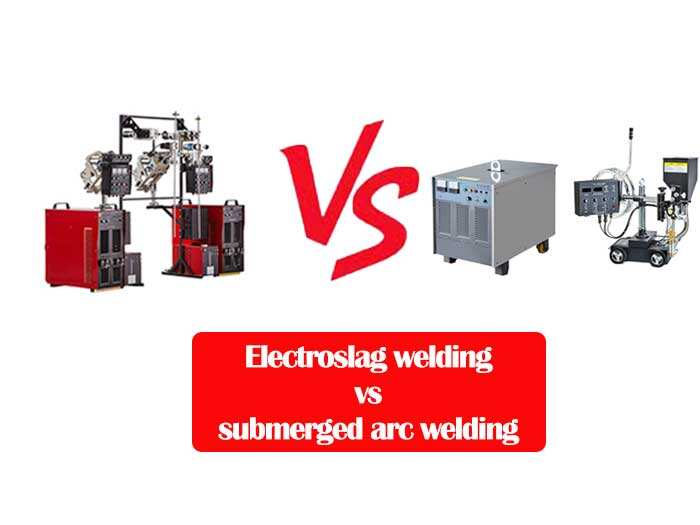
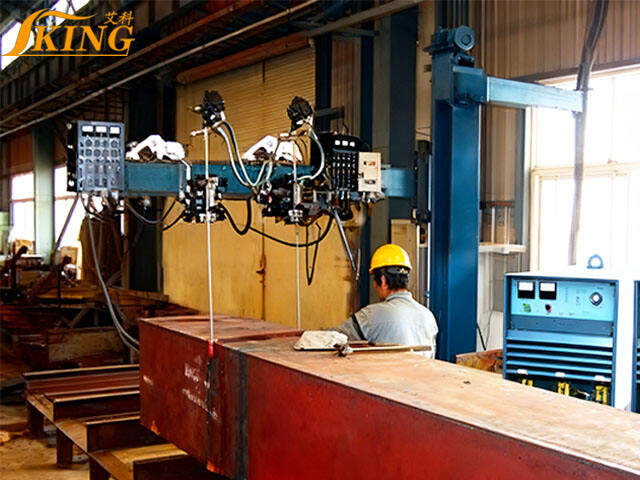
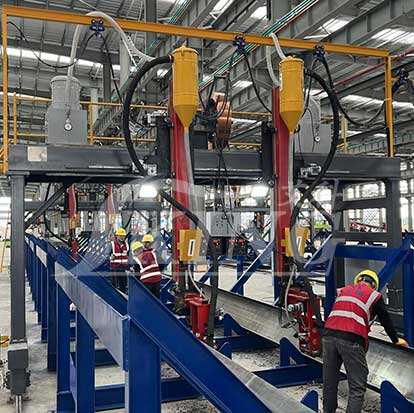
Large-scale bridge construction demands precision, efficiency, and structural integrity that conventional welding methods simply cannot deliver. The complexity of joining massive steel box beams requires specialized equipment capable of handling extreme welding requirements while maintaining consistent quality across hundreds of joints. Without the proper welding technology, bridge construction projects face significant delays, quality concerns, and safety risks that can compromise the entire infrastructure investment.
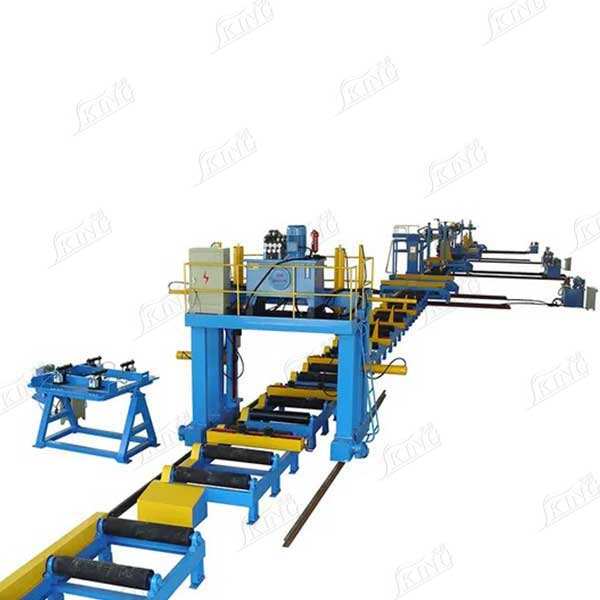
Modern bridge engineering has evolved to rely heavily on box beam construction due to its superior strength-to-weight ratio and structural efficiency. The success of these massive infrastructure projects hinges on the reliability and precision of specialized welding equipment designed specifically for box beam assembly. Understanding why a box beam welding machine becomes essential reveals the fundamental engineering and economic drivers behind contemporary bridge construction methodologies.
Box beam construction provides exceptional load distribution capabilities that make it the preferred choice for long-span bridge designs. The hollow rectangular cross-section creates optimal resistance to bending moments while minimizing material usage. A box beam welding machine ensures that the critical longitudinal seams maintain full penetration welds that can withstand the complex stress patterns experienced during bridge operation. These welds must handle not only static loads but also dynamic forces from traffic, wind, and seismic activity.
The structural efficiency of box beams depends entirely on the quality of welded connections between individual sections. Manual welding processes cannot consistently achieve the penetration depth and uniformity required for these critical joints. Specialized welding equipment provides the controlled heat input and consistent travel speed necessary to create welds that meet structural engineering specifications without introducing harmful residual stresses or distortion.
Bridge construction typically involves steel plates ranging from 20mm to 50mm in thickness, creating significant welding challenges that conventional equipment cannot address. A box beam welding machine must deliver sufficient heat input to achieve full penetration while controlling the cooling rate to prevent cracking or excessive hardness in the heat-affected zone. The combination of high welding current and precisely controlled arc movement ensures proper fusion throughout the entire thickness of heavy structural steel.
The longitudinal seams of box beams require continuous welding over distances that may extend several hundred meters. Maintaining consistent weld quality across these extended lengths demands automated welding systems that eliminate human variability factors. The welding machine must maintain stable arc conditions and consistent travel speed regardless of minor variations in joint preparation or material properties along the weld path.
Large-scale bridge projects operate under strict construction schedules where delays result in significant financial penalties and public impact. A dedicated box beam welding machine can complete longitudinal seams at speeds of 800-1200mm per minute, dramatically faster than manual welding processes that typically achieve only 150-300mm per minute. This productivity advantage translates directly into reduced construction timelines and labor costs while improving project profitability.
The automated nature of specialized welding equipment allows for continuous operation during optimal welding conditions. Unlike manual welding that requires frequent stops for electrode changes and welder rotation, a box beam welding machine can operate continuously for extended periods with minimal interruption. This continuous operation capability becomes particularly valuable during weather windows when outdoor welding conditions are favorable.
Construction projects benefit enormously from the consistent weld quality delivered by automated welding systems. Manual welding processes introduce variability based on welder skill level, fatigue, and environmental conditions. A box beam welding machine eliminates these human factors by maintaining precise control over welding parameters throughout the entire welding process. This consistency reduces the need for weld repairs and quality-related delays that can significantly impact construction schedules.
The economic impact of consistent weld quality extends beyond immediate construction benefits. Bridges welded with specialized equipment typically require less maintenance over their operational lifetime due to superior weld quality and reduced susceptibility to fatigue cracking. This long-term reliability provides significant value to infrastructure owners and operators who must budget for ongoing maintenance costs over decades of service life.
The implementation of automated box beam welding systems significantly reduces the skilled welding labor required for bridge construction projects. Traditional manual welding approaches require teams of certified welders working in multiple shifts to complete the extensive welding requirements of large box beam structures. A single box beam welding machine can replace the output of 8-12 manual welders while producing superior quality results.
Labor cost savings extend beyond direct welding activities to include reduced inspection and quality control requirements. Automated welding systems produce more consistent results that require less extensive non-destructive testing and quality verification. The reduced inspection requirements translate to faster project completion and lower overall quality assurance costs while maintaining or improving structural reliability standards.
Specialized welding equipment optimizes material utilization by minimizing weld metal consumption and reducing the need for joint preparation rework. The precise control of welding parameters ensures optimal penetration with minimal excess weld metal, reducing consumable costs while maintaining structural requirements. Advanced welding systems also reduce the incidence of weld defects that require gouging and rewelding, further minimizing material waste and associated labor costs.
The improved weld quality achieved with dedicated welding equipment reduces the risk of structural failures that could result in catastrophic repair costs or project delays. The insurance and risk mitigation value of superior weld quality provides additional economic justification for investing in specialized welding technology for critical infrastructure projects.
Bridge construction environments present significant safety challenges due to height, weather exposure, and heavy equipment operation. Automated box beam welding systems reduce worker exposure to these hazards by minimizing the number of personnel required in dangerous welding positions. The enclosed nature of many automated welding systems also reduces welder exposure to welding fumes and arc radiation that can cause long-term health issues.
The consistent operation of automated welding equipment reduces the likelihood of accidents caused by welder fatigue or distraction. Manual welding in challenging positions for extended periods increases the risk of slips, falls, or contact with hot materials. Automated systems allow operators to work from safer positions while maintaining full control over the welding process through advanced control interfaces and monitoring systems.
The superior weld quality achieved with specialized welding equipment directly contributes to improved structural reliability and public safety. Bridge failures due to weld defects can result in catastrophic consequences including loss of life and major economic disruption. A box beam welding machine provides the consistent quality control necessary to minimize the risk of weld-related structural failures throughout the bridge service life.
Advanced welding systems incorporate real-time monitoring and quality control features that identify potential defects during the welding process rather than relying solely on post-weld inspection. This immediate feedback capability allows for immediate corrective action and ensures that quality issues are addressed before they become embedded in the completed structure.
The technical demands of box beam welding require precise control over arc characteristics and heat input to achieve proper fusion without causing distortion or metallurgical problems. A box beam welding machine must maintain stable arc conditions across varying joint geometries and material thicknesses while providing sufficient penetration for structural integrity. Advanced arc control systems automatically adjust welding parameters to compensate for variations in joint fit-up and material properties.
Heat input management becomes critical when welding thick steel sections where excessive heat can cause distortion or unfavorable metallurgical changes. Specialized welding equipment incorporates temperature monitoring and control systems that optimize welding parameters to achieve required penetration while minimizing heat-affected zone width and maintaining acceptable cooling rates for proper microstructure development.
Modern box beam welding systems integrate with broader fabrication processes to optimize overall production efficiency. Automated material handling systems position box beam sections for welding while maintaining precise alignment tolerances required for structural applications. The integration of welding automation with material handling reduces setup time and improves consistency of joint preparation and fit-up.
Process monitoring and data recording capabilities provide valuable quality assurance documentation required for structural welding applications. Advanced welding systems automatically record welding parameters, travel speed, and arc characteristics throughout the welding process, creating a permanent quality record that satisfies inspection and certification requirements for critical infrastructure projects.
Box beam construction offers an optimal combination of structural efficiency, material economy, and construction practicality for long-span bridges. The hollow rectangular cross-section provides excellent resistance to bending and torsion while minimizing weight compared to solid beam designs. This structural efficiency allows for longer spans with less material, reducing both construction costs and foundation requirements. Additionally, the box beam design facilitates efficient construction sequences and transportation logistics for large bridge projects.
Automated welding systems significantly reduce worker exposure to hazardous welding positions and environmental conditions common in bridge construction. The enclosed welding environment protects operators from welding fumes and arc radiation while allowing remote operation from safer locations. Consistent automated operation eliminates risks associated with welder fatigue and human error that can lead to accidents in challenging construction environments. The superior weld quality also reduces long-term structural risks that could endanger public safety.
Box beam welding machines typically achieve welding speeds of 800-1200mm per minute compared to 150-300mm per minute for manual welding processes. This represents a 3-4 times improvement in linear welding speed, which translates to proportional reductions in welding time for large structural projects. When combined with reduced rework requirements and improved quality consistency, overall productivity improvements of 400-500% are commonly achieved compared to traditional manual welding approaches.
Critical specifications include welding current capacity sufficient for thick steel sections (typically 800-1200 amps), precise travel speed control for consistent heat input, and advanced arc control systems for varying joint conditions. The equipment should provide full penetration capability for steel thicknesses up to 50mm while maintaining acceptable heat input limits to prevent distortion. Process monitoring and data recording capabilities are essential for quality documentation, and the system should integrate with material handling equipment for efficient production workflows.

Since 1991, China IKING Industrial Group has been at the forefront of advanced welding technology. With a global presence and over 30 years of experience, we offer innovative solutions in submerged arc welding, electroslag welding, and stud welding. Our high-performance machines have empowered over 100 countries and key industries such as wind energy, shipbuilding, rail transport, and heavy machinery.
RM801-822, Hongxing Building 3, Linke West Road, Hedong District, Tianjin, China
Copyright © 2026 China IKING Industrial Group Co., Ltd. All right reserved Privacy Policy
 EN
EN