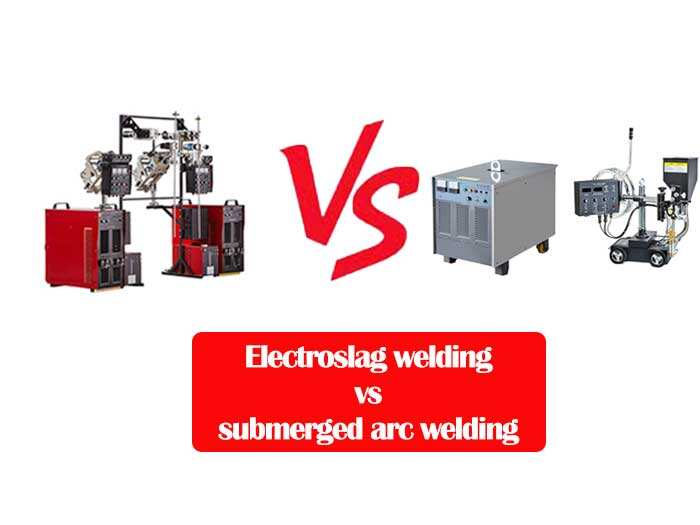
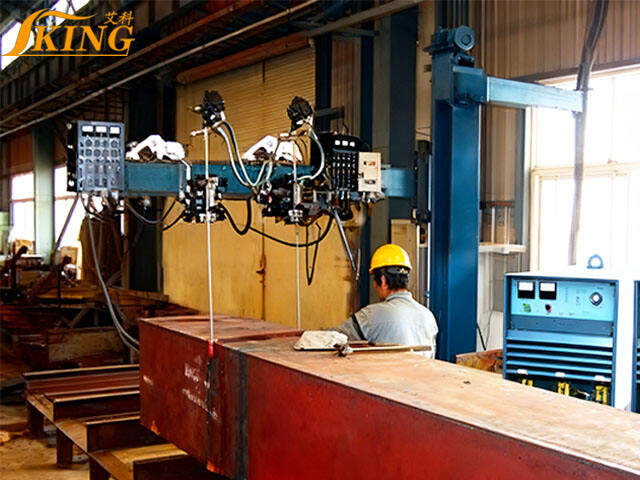
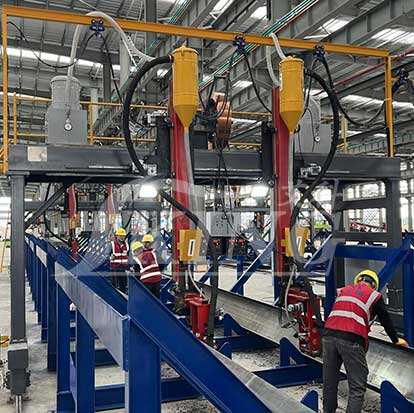
Modern manufacturing operations demand precision, efficiency, and reliability when it comes to structural welding applications. Industrial fabrication facilities increasingly rely on specialized equipment that can handle complex welding tasks with consistent quality. The selection of appropriate welding machinery significantly impacts production schedules, quality outcomes, and overall operational costs. Understanding the critical features that define superior welding equipment enables manufacturers to make informed decisions that align with their specific production requirements and long-term business objectives.
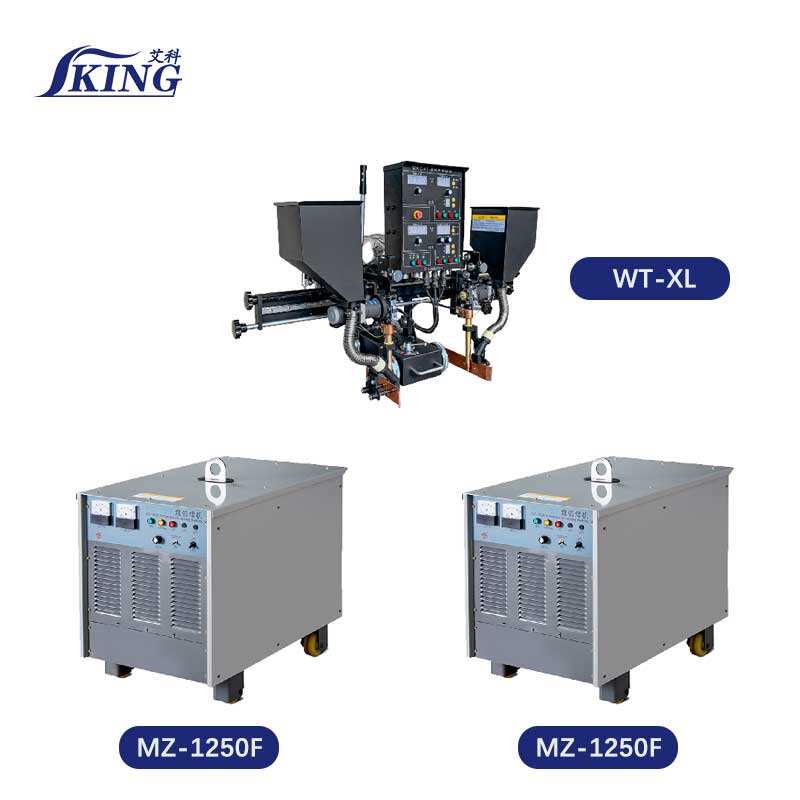
The foundation of any reliable welding system lies in its structural design and construction quality. Heavy-duty welding applications require equipment that can withstand continuous operation under demanding conditions. Premium welding machines feature robust steel frames designed to minimize vibration and maintain positional accuracy during extended welding cycles. The frame construction directly influences the machine's ability to produce consistent weld quality across different materials and thicknesses.
Manufacturing facilities benefit from equipment that incorporates reinforced mounting points and precision-machined components. These design elements ensure long-term dimensional stability and reduce maintenance requirements. Quality construction also contributes to improved operator safety by providing stable platforms for welding operations and reducing the risk of equipment failure during critical production phases.
Advanced power management systems enable precise control over welding parameters, ensuring optimal results across various material types and joint configurations. Modern welding equipment incorporates sophisticated electronic controls that allow operators to fine-tune voltage, current, and travel speed settings. These control systems often feature digital interfaces that provide real-time monitoring of welding parameters and enable quick adjustments based on changing production requirements.
Energy efficiency considerations play an increasingly important role in equipment selection decisions. Contemporary welding machines utilize advanced inverter technology that reduces power consumption while maintaining superior arc stability. This technology not only decreases operational costs but also minimizes environmental impact, supporting corporate sustainability initiatives and regulatory compliance requirements.
Manufacturing efficiency demands consistent, repeatable welding processes that minimize human error and maximize throughput. Programmable control systems enable operators to store and recall specific welding parameters for different applications, ensuring consistent quality across production runs. These systems often include memory functions that can store dozens of welding programs, allowing rapid changeover between different product configurations.
Advanced welding equipment incorporates servo-controlled positioning systems that provide precise control over welding torch movement and positioning. These systems enable complex welding patterns and ensure accurate weld placement, even in challenging joint geometries. The integration of feedback control systems allows continuous monitoring and adjustment of welding parameters, maintaining optimal conditions throughout the welding process.
Precision positioning capabilities are essential for achieving consistent weld quality in structural applications. High-quality welding equipment features linear guides and precision ball screws that ensure accurate torch positioning and smooth travel motion. These mechanical systems are designed to maintain positioning accuracy over extended periods, reducing the need for frequent calibration and adjustment.
Multi-axis control systems enable complex welding operations that would be difficult or impossible to achieve manually. These systems can coordinate movement across multiple axes simultaneously, allowing the creation of intricate weld patterns and ensuring proper torch orientation throughout the welding process. The ability to program complex motion sequences enhances production flexibility and enables manufacturers to tackle increasingly sophisticated welding challenges.
Workplace safety remains a paramount concern in industrial welding operations, requiring equipment that incorporates comprehensive protection systems. Modern welding machines feature multiple safety interlocks that prevent operation under unsafe conditions and protect both operators and equipment from potential hazards. Emergency stop systems provide immediate shutdown capability, while protective barriers and light curtains help prevent accidental contact with moving components.
Fume extraction and ventilation systems are increasingly integrated into welding equipment designs to address occupational health concerns. These systems help maintain acceptable air quality in work areas and ensure compliance with workplace safety regulations. Proper ventilation design also protects sensitive electronic components from contamination, extending equipment service life and reducing maintenance requirements.
User-friendly interfaces significantly impact operational efficiency and reduce operator training time. Contemporary welding equipment features intuitive control panels with clear displays and logical control layouts. Color-coded controls and graphical interfaces help operators quickly identify and adjust relevant parameters, reducing the likelihood of errors and improving overall productivity.
Ergonomic considerations extend beyond the control interface to include accessibility for maintenance and setup operations. Well-designed equipment provides convenient access to consumables, adjustment points, and service areas. This attention to ergonomic design reduces operator fatigue and facilitates efficient maintenance procedures, contributing to improved overall equipment effectiveness.
Manufacturing flexibility requires welding equipment capable of handling diverse materials and joint configurations. A quality box beam welding machine should accommodate multiple welding processes and wire types, enabling manufacturers to address varying production requirements with a single equipment investment. This versatility reduces capital equipment costs and simplifies operator training requirements.
Advanced welding systems incorporate adaptive control algorithms that automatically adjust parameters based on real-time feedback from the welding process. These systems can compensate for variations in material properties, joint fit-up, and environmental conditions, maintaining consistent weld quality regardless of operating conditions. The ability to adapt to changing conditions enhances production reliability and reduces the need for manual intervention.
Maximizing throughput while maintaining quality standards requires equipment designed for continuous operation and rapid changeover between jobs. High-duty-cycle welding systems enable extended operation without thermal limitations, supporting demanding production schedules. Quick-change tooling and fixtures facilitate rapid setup for different workpieces, minimizing downtime between production runs.
Integrated quality monitoring systems provide real-time feedback on weld characteristics, enabling immediate corrective action when deviations occur. These systems can detect variations in penetration, bead geometry, and other critical weld properties, helping maintain consistent quality standards throughout production runs. Data logging capabilities support quality documentation requirements and enable continuous process improvement initiatives.
Equipment longevity and reliable operation depend on thoughtful maintenance design that facilitates routine service procedures. Quality welding machines incorporate easily accessible service points and clearly marked maintenance intervals. Modular component design enables efficient replacement of wear parts and reduces service time requirements, minimizing production disruptions.
Predictive maintenance capabilities are increasingly incorporated into modern welding equipment, utilizing sensors and monitoring systems to track component condition and performance trends. These systems can provide early warning of potential failures, enabling proactive maintenance scheduling that prevents unexpected downtime and reduces overall maintenance costs.
Comprehensive technical support and documentation are essential for maximizing equipment utilization and minimizing troubleshooting time. Quality manufacturers provide detailed operation manuals, maintenance procedures, and troubleshooting guides that enable efficient problem resolution. Access to technical support resources, including remote diagnostic capabilities, helps minimize downtime when issues arise.
Training resources and certification programs help ensure proper equipment operation and maintenance. Manufacturers who invest in operator training and certification programs demonstrate commitment to customer success and help ensure optimal equipment performance throughout its service life. Ongoing technical support relationships contribute to improved productivity and extended equipment longevity.
The appropriate power rating depends on several factors including material thickness, welding process requirements, production volume, and duty cycle demands. Thicker materials and high-volume applications typically require higher power ratings to maintain productivity and weld quality. Consider both current production needs and future expansion plans when selecting power specifications to ensure long-term equipment suitability.
Automation significantly improves production efficiency through consistent welding parameters, reduced operator fatigue, and minimized human error. Programmable systems enable rapid changeover between different products while maintaining quality standards. Advanced automation also enables lights-out operation in some applications, maximizing equipment utilization and reducing labor costs.
Contemporary welding equipment typically requires routine maintenance including consumable replacement, cleaning of gas and wire delivery systems, and periodic calibration of control systems. Preventive maintenance schedules should include inspection of mechanical components, electrical connections, and safety systems. Proper maintenance practices significantly extend equipment life and maintain optimal performance characteristics.
Initial equipment investment represents only a portion of total ownership costs, with operational expenses including energy consumption, consumables, maintenance, and productivity factors contributing significantly to long-term costs. Energy-efficient designs and reliable operation reduce ongoing expenses while higher productivity capabilities can justify premium equipment investments through improved throughput and reduced labor requirements per unit produced.

Since 1991, China IKING Industrial Group has been at the forefront of advanced welding technology. With a global presence and over 30 years of experience, we offer innovative solutions in submerged arc welding, electroslag welding, and stud welding. Our high-performance machines have empowered over 100 countries and key industries such as wind energy, shipbuilding, rail transport, and heavy machinery.
RM801-822, Hongxing Building 3, Linke West Road, Hedong District, Tianjin, China
Copyright © 2026 China IKING Industrial Group Co., Ltd. All right reserved Privacy Policy
 EN
EN