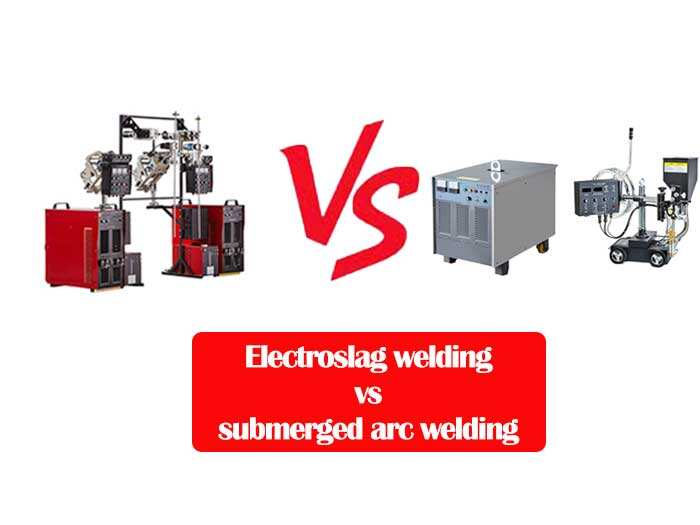
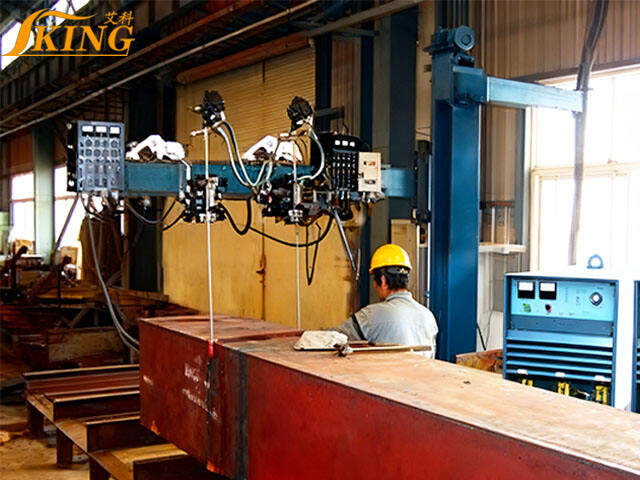
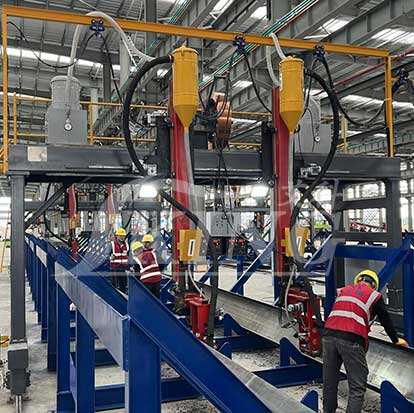
The industrial welding landscape has witnessed remarkable advancements in recent years, with sophisticated machinery revolutionizing how structural steel components are fabricated. Among these innovations, the box beam welding machine stands as a cornerstone technology for heavy construction projects, bridge manufacturing, and industrial infrastructure development. These specialized welding systems offer unprecedented precision, efficiency, and quality control for creating robust box beam structures that form the backbone of modern architecture and engineering projects.
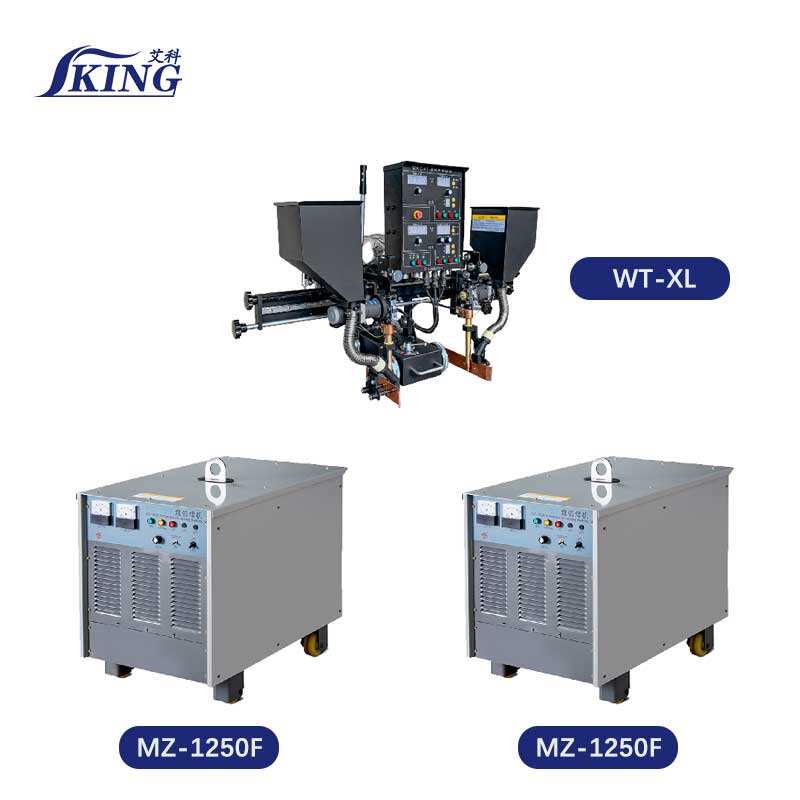
Modern fabrication facilities increasingly recognize the competitive advantage that advanced welding automation brings to their operations. The complexity of contemporary construction projects demands equipment capable of maintaining consistent quality while maximizing throughput. Understanding the technical specifications, operational capabilities, and strategic benefits of box beam welding machines becomes essential for manufacturing executives, project managers, and engineering professionals tasked with equipment procurement decisions.
This comprehensive guide explores every aspect of box beam welding machine selection, from fundamental operational principles to advanced technical considerations. We examine the critical factors that influence purchasing decisions, analyze the latest technological innovations, and provide practical insights for optimizing welding operations across various industrial applications.
Box beam welding machines utilize advanced submerged arc welding processes to create continuous, high-quality welds along the longitudinal seams of structural steel box sections. These systems employ multiple welding heads positioned strategically around the workpiece, enabling simultaneous welding of multiple seams with exceptional consistency. The submerged arc process provides superior penetration characteristics and produces welds with minimal porosity and excellent mechanical properties.
The automated nature of these systems eliminates many variables associated with manual welding operations. Computer-controlled positioning systems ensure precise torch placement and consistent travel speeds, while sophisticated monitoring systems track welding parameters in real-time. This level of automation significantly reduces the potential for human error while maintaining repeatable quality standards across production runs.
Advanced box beam welding machines incorporate intelligent control systems that automatically adjust welding parameters based on material thickness, joint configuration, and desired weld characteristics. These adaptive capabilities ensure optimal weld quality regardless of variations in material properties or dimensional tolerances, making them particularly valuable for high-volume production environments.
The construction industry relies heavily on box beam structures for their exceptional strength-to-weight ratios and superior load-bearing capabilities. Bridge construction projects utilize these welded assemblies for main girders, cross-braces, and support structures where reliability and longevity are paramount. The precise welding quality achieved by automated systems ensures structural integrity that meets or exceeds demanding engineering specifications.
Industrial building construction increasingly incorporates box beam elements for warehouses, manufacturing facilities, and commercial structures. The ability to produce consistent, high-quality welds at high production rates makes box beam welding machines essential for meeting aggressive project timelines while maintaining structural safety standards. These applications often require certification to various international welding standards, making equipment capability and documentation crucial factors.
Offshore and marine applications present unique challenges that advanced box beam welding systems address through specialized process controls and environmental adaptations. The harsh operating conditions and stringent quality requirements in these industries demand equipment capable of producing welds that withstand extreme environmental stresses while maintaining long-term structural integrity.
Modern box beam welding machines offer impressive capacity ranges, typically handling workpieces from 200mm to 4000mm in height and similar width dimensions. The welding speed capabilities vary depending on material thickness and quality requirements, with high-performance systems achieving travel speeds up to 2000mm per minute while maintaining full penetration welds. These specifications directly impact production planning and facility throughput calculations.
The number of simultaneous welding stations significantly influences overall productivity. Advanced systems feature up to four welding heads operating concurrently, enabling complete box beam fabrication in a single pass. This multi-head configuration reduces handling requirements and minimizes production cycle times, making it particularly valuable for high-volume manufacturing operations where efficiency translates directly to profitability.
Material handling capabilities represent another critical performance dimension. Sophisticated systems incorporate automated loading and positioning mechanisms that handle workpieces weighing several tons with precision and safety. These integrated material handling solutions reduce labor requirements while ensuring consistent workpiece positioning for optimal weld quality.
Contemporary box beam welding machines employ sophisticated programmable logic controllers and human-machine interfaces that simplify operation while providing comprehensive process monitoring. These control systems store welding procedures for different materials and joint configurations, enabling rapid setup changes and consistent process repeatability. The intuitive interface design allows operators to monitor multiple welding parameters simultaneously while maintaining focus on quality control.
Integration capabilities with existing manufacturing execution systems and quality management software have become increasingly important for modern fabrication facilities. Advanced machines offer comprehensive data logging and reporting functions that support quality certification requirements and process optimization initiatives. This connectivity enables real-time production monitoring and predictive maintenance scheduling that minimizes unplanned downtime.
Safety systems integrated into modern box beam welding machine designs include emergency stop functions, personnel detection systems, and automated fire suppression capabilities. These features ensure operator safety while protecting valuable equipment and work-in-progress materials from damage during emergency situations.
Determining appropriate machine capacity requires careful analysis of current production requirements and projected growth scenarios. Facilities must consider not only immediate welding needs but also potential expansion into new markets or product lines that might require different box beam configurations. Oversizing equipment can result in unnecessary capital expenditure, while undersizing may limit future growth opportunities or require costly equipment upgrades.
Modular design features enable facilities to adapt their welding capabilities as market demands evolve. Systems that offer configurable welding head arrangements, adjustable workpiece handling systems, and expandable control architectures provide flexibility for accommodating changing production requirements without complete equipment replacement.
The evaluation process should include detailed analysis of material flow patterns, production scheduling constraints, and quality requirements specific to target market segments. This comprehensive assessment ensures that selected equipment will integrate effectively with existing operations while providing the performance characteristics necessary for competitive success.
Initial equipment cost represents only one component of the total ownership equation for box beam welding machines. Operating costs including consumables, utilities, maintenance, and operator training significantly impact long-term profitability. High-efficiency power systems and optimized welding processes can substantially reduce operating expenses over the equipment lifecycle.
Maintenance requirements vary considerably between different machine designs and manufacturer support capabilities. Systems designed for easy access to wear components and featuring predictive maintenance capabilities typically offer lower long-term maintenance costs. The availability of local service support and spare parts inventory significantly influences maintenance expenses and equipment availability.
Productivity improvements achieved through advanced automation and quality control systems often justify higher initial equipment investments through reduced labor costs and improved material utilization. Quantifying these benefits requires detailed analysis of current operational metrics and realistic projections of improvement potential with new equipment.
Box beam welding machines require substantial floor space and specialized infrastructure to support optimal performance. Foundation requirements typically specify reinforced concrete pads designed to minimize vibration and ensure precise machine alignment over time. Adequate clearance around the equipment is essential for material handling, maintenance access, and operator safety.
Electrical power requirements for high-capacity welding systems often necessitate dedicated transformers and distribution panels capable of handling substantial inrush currents during welding initiation. Proper power conditioning and backup systems protect sensitive control electronics while ensuring consistent welding performance during utility fluctuations.
Ventilation systems must effectively remove welding fumes and maintain comfortable working conditions while preventing contamination of the welding environment. The design of exhaust systems requires careful consideration of airflow patterns to avoid disrupting shielding gas coverage while maintaining adequate fume extraction rates.
Successful implementation of advanced box beam welding systems requires comprehensive operator training programs that cover both technical operation and safety procedures. Modern equipment complexity demands operators who understand welding metallurgy, control system operation, and quality assessment techniques. Investment in proper training significantly influences equipment productivity and weld quality consistency.
Maintenance training programs ensure that facility personnel can perform routine maintenance tasks and recognize potential problems before they result in costly equipment damage or production interruptions. Understanding preventive maintenance schedules and proper troubleshooting procedures extends equipment life while minimizing service costs.
Ongoing skill development initiatives keep operators current with evolving technology and industry best practices. Partnerships with equipment manufacturers and welding institutes provide access to advanced training resources and certification programs that enhance operational capabilities.
Advanced box beam welding machines incorporate sophisticated quality monitoring systems that track critical welding parameters throughout the fabrication process. Real-time monitoring of arc voltage, welding current, travel speed, and wire feed rate enables immediate detection of process deviations that could affect weld quality. These systems generate comprehensive documentation required for quality certification and traceability.
Automated inspection capabilities using vision systems and ultrasonic testing methods provide immediate feedback on weld quality without interrupting production flow. These non-destructive testing methods identify potential defects early in the process, reducing rework costs and ensuring consistent quality standards.
Integration with quality management systems enables comprehensive tracking of welding procedures, operator certifications, and material certifications throughout the production process. This documentation capability supports compliance with industry standards and customer quality requirements while facilitating continuous improvement initiatives.
Box beam welding operations must comply with various national and international standards depending on application requirements and geographic markets. AWS D1.1 structural welding code, EN ISO standards, and other regional specifications define welding procedure qualification requirements, inspector certifications, and quality documentation standards.
Equipment capability for producing welds that meet these demanding standards requires careful consideration during the selection process. Systems must demonstrate consistent performance across the range of materials, thicknesses, and joint configurations specified in relevant codes while maintaining documented quality records.
Certification bodies increasingly require comprehensive quality management systems that integrate welding equipment capabilities with documented procedures and qualified personnel. This systematic approach ensures consistent compliance while supporting continuous improvement initiatives that enhance competitive positioning.
Automated box beam welding machines offer significant advantages including consistent weld quality, higher production rates, reduced labor costs, and improved safety. These systems eliminate human variables that can affect weld consistency while enabling simultaneous multi-seam welding that dramatically increases throughput. The automated processes also reduce operator exposure to welding hazards and fumes while maintaining precise control over welding parameters that ensure repeatable quality standards.
Capacity determination requires analysis of current production volumes, material size ranges, and quality requirements combined with projected growth scenarios. Consider the maximum box beam dimensions you need to fabricate, required production rates, and material thickness ranges. Factor in setup times, maintenance schedules, and potential product line expansions to ensure selected equipment will meet both current and future operational needs without creating bottlenecks.
Modern systems require routine maintenance including welding consumable replacement, mechanical component lubrication, and electrical system inspection. Preventive maintenance schedules typically include daily operational checks, weekly component inspections, and monthly comprehensive system evaluations. Advanced systems feature predictive maintenance capabilities that monitor component wear and recommend service intervals based on actual usage patterns rather than fixed schedules.
Manufacturer support and local service availability are critical factors that significantly impact equipment productivity and long-term operational costs. Comprehensive support including installation assistance, operator training, technical documentation, and responsive service support minimizes downtime and ensures optimal performance. Local service availability reduces response times for emergency repairs and maintenance while providing access to genuine replacement parts and technical expertise.

Since 1991, China IKING Industrial Group has been at the forefront of advanced welding technology. With a global presence and over 30 years of experience, we offer innovative solutions in submerged arc welding, electroslag welding, and stud welding. Our high-performance machines have empowered over 100 countries and key industries such as wind energy, shipbuilding, rail transport, and heavy machinery.
RM801-822, Hongxing Building 3, Linke West Road, Hedong District, Tianjin, China
Copyright © 2026 China IKING Industrial Group Co., Ltd. All right reserved Privacy Policy
 EN
EN